Stretching is a simple way to add movement to your daily routine. It requires little space, no special equipment, and only a few minutes at a time. Whether you spend much of the day sitting, enjoy regular workouts, or want to move more comfortably, a beginner-friendly stretching routine can be a useful habit.
The key is to keep things gentle and consistent. You do not need to be naturally flexible or spend a long time stretching to get started. With a few basic principles and a safe approach, you can create a routine that fits easily into your home life.
What Is Stretching?
Stretching involves moving your body into positions that gently lengthen your muscles. Different types of stretching serve different purposes.
Static stretching
Static stretching means holding a comfortable position for a set amount of time. For example, you might sit with one leg extended and gently reach toward your foot. This is often included in cool-down routines or relaxed flexibility sessions.
Dynamic stretching
Dynamic stretching uses controlled movement through a comfortable range of motion. Examples include arm circles, gentle leg swings, and walking lunges. These movements can help prepare your body for activity.
For most beginners, a combination of gentle dynamic movements and relaxed static stretches is a practical place to start.
Benefits of Stretching at Home
A regular stretching routine may help you:
– Move your joints through a comfortable range of motion
– Feel less stiff after sitting or resting
– Prepare your body for physical activity
– Relax after a busy day
– Become more aware of your posture and movement
– Build a consistent wellness habit
Stretching is not a competition. Progress can be gradual, and everyone’s flexibility is different. Focus on how your body feels rather than trying to copy another person’s range of motion.
How to Prepare for a Stretching Session
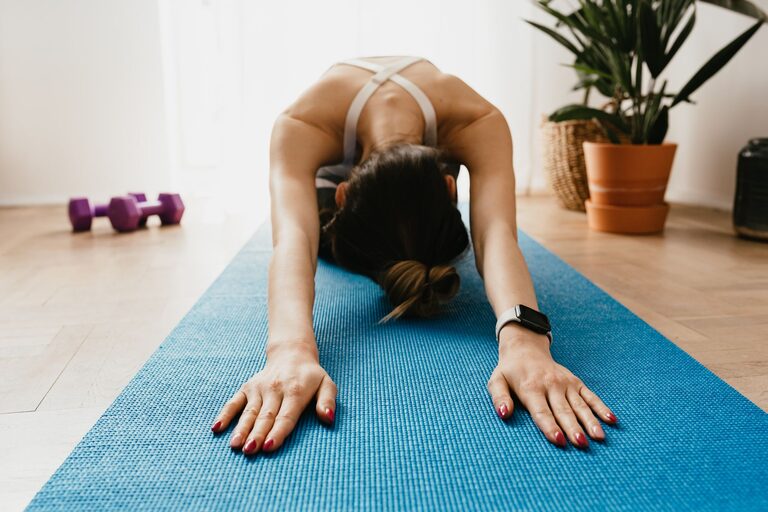
You can stretch in almost any clear area of your home. A yoga mat, carpet, or folded towel may make floor-based movements more comfortable, but these items are optional.
Before you begin:
- Choose a space where you can move without bumping into furniture.
- Wear comfortable clothing that does not restrict movement.
- Avoid stretching immediately after sitting still for a long time without warming up.
- Start with a few minutes of easy movement, such as walking around the room.
- Keep water nearby if you are exercising in a warm space.
A short warm-up helps your body ease into movement. It does not need to be intense. Gentle marching, shoulder rolls, and relaxed arm swings are enough for many beginner routines.
Beginner Stretches to Try
Move slowly and breathe naturally during every stretch. The following exercises cover several common areas of the body.
Neck and shoulder stretch
Sit or stand tall with your shoulders relaxed. Slowly tilt your right ear toward your right shoulder without lifting the shoulder. Hold briefly, return to the center, and repeat on the other side.
Next, bring your arms across your chest one at a time for a gentle shoulder stretch. Keep your shoulders down and avoid pulling forcefully on your arm.
Chest stretch
Stand near a doorway or place your hands behind your back. If using a doorway, rest your forearms lightly on the frame and step forward a small amount. Keep the movement comfortable and avoid forcing your shoulders backward.
This stretch can feel useful after time spent working at a desk or using a phone.
Upper back stretch
Extend your arms in front of you and clasp your hands. Gently round your upper back while reaching your hands forward. Let your head remain relaxed without pushing your chin toward your chest.
You should feel a mild stretch across the upper back and shoulders.
Standing side stretch
Stand with your feet about hip-width apart. Raise your right arm overhead and gently lean to the left. Keep both feet grounded and avoid twisting your body. Return to the center and switch sides.
Keep the movement small enough that you can breathe easily.
Standing quadriceps stretch
Use a wall or sturdy chair for balance. Bend one knee and bring your heel toward your seat. Hold your ankle or the lower part of your pant leg, keeping your knees close together.
Keep your standing leg comfortable and your torso upright. Switch sides after a gentle hold.
Hamstring stretch
Place one heel on a low step or extend one leg forward with the heel on the floor. Keep your back long and gently lean forward from your hips. Avoid rounding your back or reaching forcefully toward your toes.
You should feel the stretch along the back of your extended leg.
Calf stretch
Face a wall and place both hands against it. Step one foot back, keeping the heel down and the back leg as straight as is comfortable. Bend the front knee slightly and lean toward the wall.
Switch sides after holding the position gently.
Hip stretch
Sit on a chair and place your right ankle over your left thigh. Keep your back straight and lean forward slightly from your hips. Switch sides when finished.
If this position does not feel comfortable, keep both feet on the floor and gently move one knee outward while maintaining good posture.
A Simple Home Routine
A beginner routine can take about 10 minutes:
- March gently in place for two minutes.
- Perform shoulder rolls and arm circles for one minute.
- Complete the neck, chest, and upper back stretches.
- Add the standing side, quadriceps, hamstring, calf, and hip stretches.
- Finish with slow breathing for one minute.
Hold each static stretch for about 15 to 30 seconds, then release slowly. Repeat on both sides when appropriate. One round is enough when you are starting.
You can practice this routine three to five times per week, or use selected stretches during breaks throughout the day.
Common Mistakes to Avoid
Stretching should feel controlled and comfortable. Try to avoid these common mistakes:
– Bouncing or jerking into a stretch
– Holding your breath
– Stretching through sharp, sudden, or intense pain
– Comparing your flexibility with someone else’s
– Forcing your body into a deeper position
– Ignoring balance or using unstable furniture
– Trying to make up for missed sessions with an overly long workout
A mild pulling sensation is generally different from pain. If a movement feels wrong, stop and return to a neutral position. If you have an injury, ongoing discomfort, or a condition that affects movement, consider asking a qualified professional which activities are suitable for you.
How to Make Stretching a Habit
The easiest routine to maintain is one that fits your schedule. Try stretching:
– After waking up
– During a work or study break
– After a walk
– Before bed
– While watching a short program
– Immediately after another daily habit, such as brushing your teeth
Keep your routine simple at first. You can mark sessions on a calendar or use a timer to make the habit easier to remember. Over time, you may notice that certain movements feel more comfortable or that you can hold positions with greater ease.
Final Tips for Beginners
Stretching works best when it is steady, gentle, and realistic. Start with a few movements, pay attention to your breathing, and give yourself time to improve. You do not need a perfect routine or advanced flexibility to benefit from regular movement.
Listen to your body, stay patient, and focus on making stretching a comfortable part of your everyday life.
About the Author